Available amperage for 12v heated gear

Joined
Feb 28, 2025
Messages
42
Location
Missouri
Bike
2010 Honda NT700V
I took the NT700 yesterday morning for bloodwork 25mi up the interstate, cool morning, touched 36 on the bike thermometer. Off season I had purchased 12v jacket and pants liners, but I was testing my Tourmaster Trek jacket in cooler weather (can't recommend the jacket), and I knew it would be warmer on the ride back, so I did not wear any heated gear.

Turns out, I needed some heat. According to the specs on my liners, they each draw 6.2 amps (maybe that's on the highest setting). I also have heated grips on the bike, which I used yesterday. I could forego the heated grips and rely on my battery heated gloves, I also have a battery heated vest which I used last winter and worked well.

The heated gear plugs into the optimate lead wired directly to the battery. I am concerned about running both pieces of 12v gear at the same time. Perhaps I should have examined specs before the purchase...
 
Should have an output of about 450W max, and the NT was designed with running heated grips, fog lights and audio system in mind.

I'd however keep a close eye on the stator <> VRR connector/shell (3-pin, yellow wires, located LHS), as the one on my GF's '07 NT700VA went toast this year...
Probably due to humidity/road-spray caused corrosion, was an easy fix though...
 
You can gain almost 100W by switching the headlamps, and taillamps to LED bulbs.

Mike
 
When I was commuting to a job during Winter months; my last incarnation of heated gear was: NT's heated grips plus Gerbing gloves, jacket liner, and pants liner.
And although I only wore this combination for two or three seasons with my NT; my NT handled it better than my Suzuki GSXR-750 and Moto Guzzi Griso.

My NT is still on it's original stator.
Whereas with that full Gerbing setup; my Griso went through one alternator after about four seasons.
And replacement alternator never put out same power as original alternator. :mad:
With Widder vest and Gerbing gloves; my GSXR-750 was going through stators every other year.

Edit to add:
I should note; that I always parked my bikes in garage WITH battery tender.
So if the heated gear depleted the battery; the tender corrected it.
 
I'll copy paste some posts I made years ago. TLDR .. I rode my NT all winter with heated: jacket liner, pants liner, glove liner and boot inserts. I never killed the battery . Now the wall of text...


I ran full heated gear on my previous Honda and never drained the battery, its alternator only had maybe 50 watts more available than the NT does.

It's kind of annoying, but it involves some basic math and common sense usage of the gear.

The NT's alternator produces 438 Watts at 5K RPM. This is at or below highway cruising speed where you'd feel the need to turn up the heated gear, so I feel safe using that as the number for the total available power.

An * denotes estimated, everything else is values straight from the NT manual.

55w low beam
55w high beam
21/5w Brake - Tail Light (x2)
21w turn signal front (x2)
21w turn signal rear (x2)
5w position light (you could pull this and save 5w)
5w plate light
60w fuel pump*
50w ignition*
60w rad fan*
25w ECU*
3w instruments*
45w horn*

Intermittent loads like the horn, turn signals, brake lights, and even the radiator fan as it probably isn't coming on in those temps, you can leave out of the calculations.

So that leaves the NT riding the highway with low beam on using about 213 watts. I'm not entirely sure what's going on with the front turn signals when in their dim mode, but I doubt they're drawing 42w. (low beam + 10w combined tail + position light + plate light + ignition + ECU + gauges + fuel pump)

Turn on the highbeam for night riding you're now at 268 watts.

438w available - 268w used = 170 watts left over if you're running High Beam
438w available - 213w used = 225 watts left over if you're running Low Beam

If I add up all my heated gear (pants, jacket, insoles, gloves) that comes out to about 150W on highest setting. I typically don't run everything on highest setting, so the actual draw for the gear could be 3/4 or even 1/2 that 150W rating.

Now the common sense stuff. If I'm hooking up some heated gloves, I'd leave the grips turned off. I'm not going to be idling at a stoplight with my high beam, aux lights, and gear set to full blast as alternator output drops with RPM. I've got a cheap Voltmeter fitted, so if I exceed stator output and start draining off the battery I should see it.


Feel free to chime in if my math looks off. Does anyone know the exact Wattage of the honda line grips? I'm assuming it's anywhere from 20 - 50 W. I see a bunch others at 48w, guessing it's the same that would be around 175 watts with pants, jacket, insoles set to high . From my experience, heated gloves are more effective. So even more reason to save 25ish watts and leave the grips off.

i saw some jackets with their own removable rechargeable battery for heating, good enough for 4-8 hours of heat...

CONQUECO Men's Heated Jacket Soft Shell Hoodie Jacket w/Battery for Outdoors at Amazon Men’s Clothing store

Buy CONQUECO Men's Heated Jacket Soft Shell Hoodie Jacket w/Battery for Outdoors and other Fleece at Amazon.com. Our wide selection is elegible for free shipping and free returns.
www.amazon.com
Click to expand...
I think you'd be just fine plugging to the bike, just be smart about it. I did a ride recently in the low 30's, cruising backroads maybe at 4K RPM. I had the jacket around 50 - 75% and the grip heaters near max. High beam used as normal. Was out for an hour or so, and no indication I was draining off the battery. To be a bit more specific, Low on the pants/insole combo was what I settled on. Those two items are rated for around 55W at 100%. My gear, and I imagine most on the market, use PWM as means to control temperature setting. There's three settings on this particular pants controller, so figure "Low" is a 33% duty cycle.

If there's still concern, there's plenty you can do to give yourself more breathing room. Reduce wind with deflectors and high windshield. You could gain 5W by removing the position light. Although I'm not a fan of doing this from a light control aspect, you can free up 40 - 60W by swapping the headlight halogens for LED drop-ins. That's a huge gain, enough to run a garment or two. Fit a voltmeter to keep an eye on the charging system. The better insulating your outer layers are, the less you'd need the electric heat. If your riding suit makes you look like Randy from "A Christmas Story", you probably don't need the electric gear set to high.

 
Should have an output of about 450W max, and the NT was designed with running heated grips, fog lights and audio system in mind.

I'd however keep a close eye on the stator <> VRR connector/shell (3-pin, yellow wires, located LHS), as the one on my GF's '07 NT700VA went toast this year...
Probably due to humidity/road-spray caused corrosion, was an easy fix though...

Adding heated gear should have nothing to do with stator life. But still good idea to inspect that connection on occasion regardless. The stator is always outputting a given power at RPM (assuming stock shunt style voltage regulator in use). Any power the bike doesn't use the Rectifier has to toss as heat. Adding accessories like heated gear actually gives a shunt Rectifier a break as that's less power it needs to shunt to ground as waste heat. You exceed stator output you'll just start draining down the battery.

If the concern is stator life you install a newer style series Rectifier that can turn off the tap from the stator. Especially useful if you're dropping electrical load (replacing halogen with LEDs for example).
 
Last edited:
Adding heated gear should have nothing to do with stator life. But still good idea to inspect that connection on occasion regardless. The stator is always outputting a given power at RPM (assuming stock shunt style voltage regulator in use). Any power the bike doesn't use the Rectifier has to toss as heat. Adding accessories like heated gear actually gives a shunt Rectifier a break as that's less power it needs to shunt to ground as waste heat. You exceed stator output you'll just start draining down the battery.

If the concern is stator life you install a newer style series Rectifier that can turn off the tap from the stator. Especially useful if you're dropping electrical load (replacing halogen with LEDs for example).
My personal experiences say otherwise.
 
Lots of info, thanks for the responses. I will look for LED replacement bulbs. I did have the windscreen up all the way, and my palms were plenty warm, not so much the back side of my hands, and if I took my left hand off the grip for any reason, the wind sucked the heat away very quickly. I will likely skip the grips and go with my heated gloves.
 
My personal experiences say otherwise.

Care to elaborate on this, or was this just merely a coincidence? If your NT700V is running OEM or even a MOSFET regulator/Rectifier the stator is ALWAYS running at maximum output. It doesn't care how many heated accessories you have, the battery might though


And @ OP, switching to LED is going to add more stress on your shunt regulator when not running heated gear. It'll have more heat to toss, potentially shortening its life. If it shorts it has potential to take the stator with it. I have nothing positive to say about light patterns of LED bulbs in halogen reflectors, but if you're set on doing that it would be wise to install a Series Rectifier
 
Last edited:
In my experience on the NT700, the colder the temperatures the lower the amount of usable watts that are available. This is from real world experience riding in temperatures as low as -20°C (-4°F). Once the temperatures were above about 10°C (50°F), I didn't have a problem with power. I had a Sparkbright Eclipse Voltage monitor in the dash on the bike (red LED next to the fuel gauge) to keep an eye on the battery (highly recommended).

So, I would recommend battery powered gear that also has the option of direct connection to the bike (for longer rides or in case you forget to charge the batteries:doh1:). I believe Keis do this type of kit. Use the jacket's internal battery power wherever possible. My 10¢ (-/2d in old money)

DSC_0407.JPG
 
Last edited:
I have nothing positive to say about light patterns of LED bulbs in halogen reflectors, but if you're set on doing that it would be wise to install a Series Rectifier
I use the Sylvania LED bulbs and am very pleased with the light pattern. Unlike many of the ChiCom offerings, they are engineered from the ground up to mimic the beam pattern of halogen bulbs. They are somewhat pricier than the ChiCom bulbs, but worth every penny..
Mike
 
  • Like
Reactions: ett
I've used the Sylvania LEDs before. While they are closer than years past, they're still not quite the same as the halogen spread. And if you read the packaging it's officially for "fog and off-road only", not legal for on road main headlight halogen reflector drop in.
 
My thoughts are it is best to not overload the electrical charging system. Some add-ons would be OK just keep in limits.
I now own a Kawasaki Versys. It uses a shunt regulator and there is quite a bit of discussion on that forum about failed stators. My reasoning to prevent possible issues is if the system is overloaded, (too much heated gear or whatever else) the system voltage may drop with a corresponding increase in current. More current would mean more heat in the stator, which could degrade the varnish type insulation of the coils.
I have not had any problems with the electricals on either the NT or the Versys but keeping load within limits is a good idea.

Arknt
 
My thoughts are it is best to not overload the electrical charging system. Some add-ons would be OK just keep in limits.
I now own a Kawasaki Versys. It uses a shunt regulator and there is quite a bit of discussion on that forum about failed stators. My reasoning to prevent possible issues is if the system is overloaded, (too much heated gear or whatever else) the system voltage may drop with a corresponding increase in current. More current would mean more heat in the stator, which could degrade the varnish type insulation of the coils.
I have not had any problems with the electricals on either the NT or the Versys but keeping load within limits is a good idea.

Arknt

The stator is ALWAYS at max output with a shunt regulator. Depending on the electrical demand of the bike, it's the regulator's job on how it wants to handle that power. It'll hand over what the bike needs for the load and toss the rest as heat.

If you put a clamp ammeter around one of the NT's yellow stator wires with a bone stock electrical load, and rev it to 5KRPM, you will see ## amps. If you plugged up a heated jacket liner on high , and pants liner on low. Revved up to 5K you should see essentially the same ## amps.

If you want to save stators, you install a series regulator that can throttle down stator output when all that juice isn't needed.

The NT has enough power available to run heated gear on reasonable settings without exceeding the load. Now if you have a stereo, spotlight, and ships air compressor with foghorn installed I can't say the same.
 
The stator is ALWAYS at max output with a shunt regulator. Depending on the electrical demand of the bike, it's the regulator's job on how it wants to handle that power. It'll hand over what the bike needs for the load and toss the rest as heat.

If you put a clamp ammeter around one of the NT's yellow stator wires with a bone stock electrical load, and rev it to 5KRPM, you will see ## amps. If you plugged up a heated jacket liner on high , and pants liner on low. Revved up to 5K you should see essentially the same ## amps.

If you want to save stators, you install a series regulator that can throttle down stator output when all that juice isn't needed.

The NT has enough power available to run heated gear on reasonable settings without exceeding the load. Now if you have a stereo, spotlight, and ships air compressor with foghorn installed I can't say the same.
I think you win the prize if Any bike uses the old shunt regulator....the main thing I would reccommend, as you mentioned, is a simple cheep stickon voltmeter. If your bike doesnt have one. Two of my bikes and certainly the Suzuki V strom have built in ones. If the voltage is the normal max at any speed, you are not overloading the "alternator" Many bikes have huge finned heat sinks in the air flow stream.....to disapate the unused energy. Any bike burning up stators has a design flaw.....
 
I have one of those lighter plug voltmeter/ambient temp thermometer which I use, minor fluctuation in the voltage. Again, I appreciate all the responses and am looking forward to some cold weather riding.
 
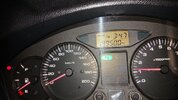
I rode the NT700 in some cooler weather yesterday, low 50s very damp and overcast, 12v jacket liner, heated grips on medium or low. The volt meter jumped around between 13.9 and 14.2. I hope this is "normal" and that it's not supposed to show non varying voltage, I'd hate to have to think about electrical problems.

The 12v jacket liner on low was great, very comfortable with a lighter jacket, no quilted liner. I am looking forward to some even colder temps to really test the gear.
 
The heated grips temp control is likely by pulse width modulation accounting for the voltage variance you are experiencing which is normal.

Mike
 
Another test today, heated jacket AND pants liners, only on low, temps just above 40, winds out of the N gusting to over 30, they said. I wore non heated gloves so used the grip heaters, on medium. Voltage jumped around between 13.8 and 14.1. If the electrical system supports it I have another 20 degrees lower I think I can go, and maintain comfort.

The liners of course function as windbreakers also, although I will say the side of me facing the wind had the heat noticeably drawn off.

I posed this question initially because back in June I, unwittingly, rode to the point of heat exhaustion, and now I have effectively shortened my riding season by 5 months or so. Nov, Dec, and Jan will be my peak riding season now.
 
Back
Top Bottom