UK to possibly ban some ICE motorcycles starting in 2035?

That is untrue, and not how it works. Every wind project is connected to the grid... done... it can get to population centers if it is generating.
One of our professors left to build data centers in West Texas using power that costs him nothing. The wind turbines don't have enough infrastructure to get the electricity out of West Texas even to central Texas, so he buys power for $.0001 per kilowatt hour. It may be different in Washington, but not in the Midwest.

My point is that the wind turbines that are all over the central plains are a source of power for charging stations, as would be solar arrays in New Mexico or Utah or California.
 
Holy crap! We are doomed! I'm just shaking my head in disbelief.

Are Texans building power generation stations without sufficient power carrying transmission lines? Yes. This would be like changing your homes 200A Main Breaker to 100A and blame your local electric utility for not being able to sell you the power you need.

Is Texas continuing to build power generation that can not be used? IDK

Why the Texas grid causes the High Plains to turn off its wind turbines

I apologize harryhendo, I wouldn't think the wind energy companies would deceive investors to fund generation stations that have no means to deliver it's product at full capacity. Probably just deceiving taxpayers, so that's easy and free!

Dan, I too am taken aback by the article, but somehow, I'm not surprised. One might ask how this could possibly happen? I'm not sure of the particulars but the answer lies within two words....... government subsidy! I'm sure that the folks who built the wind turbines took advantage of a government subsidy for green energy. After all, who can turn down free money? Now we have a situation where we have surplus generation capacity and nowhere to go with it. Had the free market been involved versus government diktat, you can be sure that the newly installed wind turbines would not have been built until they could be contributing to the grid. This illustrates my earlier contention.

Mike
 
TX has the truly asinine position of being on its own as regards power generation so unwilling to take power from other states. The brownouts and blackouts they suffered in the past could have been resolved to some degree by joining the other states, but they want to go their own way.
 
A complete gasoline tank fill up takes about 15 mins. How long does a complete charge up take. I can also carry a couple of 5 gallon cans of gasoline with me. Can you carry a couple of cans of 60k watts each of electrons with you. I am not interested in waiting 2 to 8 hours in the hot desert to get another 300 miles down the road. And who is going to pay that country store owner out in the middle of no where, with maybe 2 gas pumps, for the charging stations, maint and and the electrons used for charging. There is a lot more that goes into this than just plopping a charging station here and there in these small little towns across the west. Don't get me wrong, I think the tech of electric cars is great, and E- cars do meet some needs, but they are not and never will be the end all, and will not solve "climate change" on a mass scale with out producing more unforeseen consequences. A combination of technologies and a choice of which technology one wants to use with out demonizing the other, is how all of this should be approached.

(A typical electric car (60kWh battery) takes just under 8 hours to charge from empty-to-full with a 7kW charging point. Most drivers top up charge rather than waiting for their battery to recharge from empty-to-full. For many electric cars, you can add up to 100 miles of range in ~35 minutes with a 50kW rapid charger. Nov 11, 2021 )

PS: hope that charging station out in BFE is operational when I get there, or there is not a line of E-cars waiting to use it. Better bring one sleeping bag.:rofl1:
The technology is advancing fast. There are fast chargers now that will charge you to 80% in 15 minutes. The 8 hour charge time you cite is for home charging on a normal 110 volt system. And that gas/ electric station owner will be paid for his electrons. Where there’s a demand, private industry will make it happen, especially with the push assist from the government.
 
One was $69k and the other was $89k...wow! How do people afford such prices? :-(
Their manufacturing requires a lot more (rare) raw materials then a conventional vehicle...
(and why they're building humongous, >3 ton SUV's & Pickups as EV is beyond me...)
Investors and corporations are on the run for new mining grounds (preferable in political stable nations) like Australia...
Remote, previously untouched regions will be devastated and contaminated for decades if not longer...
 
Here in Arkansas I think 2 years ago I went through a short rolling blackout so that our utility could send some power to the Texas grid to help when they were in crisis mode. The situation has room for improvement.

With people talking green, gov subsidies, the infrastructure improvements needed, rare metals for batteries, different needs in different areas of the country & world, etc. this stuff gets overly complicated fast.
I'm young enough to see how some of the early changes will work out. Mostly my opinion is it will just cost the average person too much $$ to work well.

Arknt
 
So I'm late to this discussion, but I also just got back from a vacation in Europe (Germany & France). I'd discussed many of these points with family there because of European mandates to roll out EVs and associated infrastructure and what was the best way possible. There are certainly many ways, with incentives and mandates across the world... but the big takeaway that really struck home with me was the gas crisis in Germany and how it was forcing people to take fewer showers and use less electricity, and in France the extremely low rivers.

One interesting note was the large amount of EVs (including buses and mopeds) that we came across. When I look at the home here in the United States, we are WAYYYYYYY behind Europe and Asia. I'd say about 10 years behind Europe and maybe 15-20 behind China/Asia. We rode an all electric tour bus through Paris... super quiet, no exhaust. Electric bicycles and electric mopeds were seemingly everywhere. In the US we are REALLY lagging to a degree that we will be left behind the EV/modernizing world unless we catch up quickly!

In the South of France where we vacationed with extended family, the rivers were so low that they were no more than 1 meter deep and you could literally walk across them. Rivers that were swift and deep just a decade or two ago... now riddled with algae and reduced oxygen. In the countryside everywhere were trees and brush shedding leaves in a false-autumn due to the starvation from lack of rainfall. Essentially the last ditch by the plants to survive before they die.

It then resonated with me that I have to look at the big picture - regardless of how it's executed. If we're going to prevent further mass migrations, starvation and significantly increased hardship in living for the population on this planet and frankly survive, then we're going to have to look at this through the lenses of those that are suffering most. . Our family in Europe is already doing their part and adopting EVs or using less. If that means I have to switch, then our family will gladly do so as early as we can here... economics, government and politics aside. My kids are only 6 and 9... they're just getting started in a world that will be riddled with more severe storms, droughts, mega-wildfires and energy problems.

What fun is biking through the countryside and mountains if it's all dead or burned down? What kind of future am I leaving my kids by not changing up when I can?

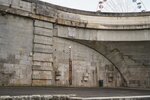
Sometimes you have to see this stuff firsthand for it all to sink in. Here are some photos of the extremely low rivers in France I took earlier last week.
 

Attachments

  • DSC04744.jpg
    DSC04744.jpg
    100.2 KB · Views: 28
  • DSC05824.JPG
    DSC05824.JPG
    90.5 KB · Views: 33
  • DSC05837.JPG
    DSC05837.JPG
    109.4 KB · Views: 32
  • DSC05838.JPG
    DSC05838.JPG
    115.5 KB · Views: 26
Last edited:
The California Air Resources Board (CARB) voted today that in 2035 all sales of new cars and light trucks must be zero emission vehicles. I saw no mention of motorcycles. I believe large diesel trucks will be allowed until 2045. Under the new rules, 35% of new cars must be zero emission by 2026, 68% by 2030, and 100% by 2035.

For those not in the U.S. and not familiar with CARB, it was created in 1966 and given broad authority by the U.S. Congress to set regulations even more strict than set by the federal government, and since then has called the shots with regard to vehicles sold in California. Many states follow their lead, and for many years auto makers made two sets of vehicles- those that complied with U.S. emission standards, and a version that complied with California‘s stricter standards. They have since just sold the stricter standard for the entire USA.

The sale and purchase of used ICE vehicles will still be allowed after that date. Buyers may also purchase an ICE vehicle from another state. But surrounding states usually follow California’s lead in these matters. 12 states already copy all of California’s CARB regulations.

Gabe, my neighbors just returned from a vacation in Portugal and also were struck by the mega drought. They saw whole fields and forests brown and dead. Rivers that used to be 20 feet deep or more are now narrow and you can walk across. The area government said without significant rainfall, they will completely run out of water next year.
 
Last edited:
@George S.,

Just saw the headline and I think it's a good thing. As someone else said, necessity is the mother of invention and I think I heard that Japan and others are seriously looking at scaling up their EV bikes and retooling production lines.

In one of the photos above I'm actually standing in the middle of what was a fast-flowing river in France, the Loire near Amboise. There's just no water from rain and less from snow melt than ever before.

I'm willing to entertain an EV bike... probably going to look at one of the new Zero SR/S at some point. Yeah, the industry and some folks will be dragged kicking and screaming along, but it will get better - especially as competition heats up. As someone once said: Change is inevitable, except from a vending machine.
 
So since little. or any size for that mattter, motorcycles don't sell well here why why will little e-bikes? The USA is not a good motorcycle market and never has been. All the negatives about riding a motorcycle won't go away because you change the power source. The general public's negative opinion isn't going to change any time soon.
 
I don’t see people being negative per se, they’re just not practical for most.

Motorcycles here generally are not a necessary vehicle. They’re just another choice of a recreational vehicle, nothing more to most people here. And Historically we haven’t paid $8-12 a gallon for gas so it’s not like we need a money saver. We commute longish distances to work. Many parts of the country have snowy cold winters.

And why call them “little e-bikes”? They’re not tiny. They’re actually becoming bigger and more practical as the batteries evolve. Look up Energica Expedia. Looks are mostly “normal” and not something out of Transformers, and has very good range and a rapid charge. 573 lbs. At $25K they’re not for everyone but it’s evolving and when more competition hits, they’ll come down. It’s gonna happen.
 
So I'm late to this discussion, but I also just got back from a vacation in Europe (Germany & France). I'd discussed many of these points with family there because of European mandates to roll out EVs and associated infrastructure and what was the best way possible. There are certainly many ways, with incentives and mandates across the world... but the big takeaway that really struck home with me was the gas crisis in Germany and how it was forcing people to take fewer showers and use less electricity, and in France the extremely low rivers.

One interesting note was the large amount of EVs (including buses and mopeds) that we came across. When I look at the home here in the United States, we are WAYYYYYYY behind Europe and Asia. I'd say about 10 years behind Europe and maybe 15-20 behind China/Asia. We rode an all electric tour bus through Paris... super quiet, no exhaust. Electric bicycles and electric mopeds were seemingly everywhere. In the US we are REALLY lagging to a degree that we will be left behind the EV/modernizing world unless we catch up quickly!

In the South of France where we vacationed with extended family, the rivers were so low that they were no more than 1 meter deep and you could literally walk across them. Rivers that were swift and deep just a decade or two ago... now riddled with algae and reduced oxygen. In the countryside everywhere were trees and brush shedding leaves in a false-autumn due to the starvation from lack of rainfall. Essentially the last ditch by the plants to survive before they die.

It then resonated with me that I have to look at the big picture - regardless of how it's executed. If we're going to prevent further mass migrations, starvation and significantly increased hardship in living for the population on this planet and frankly survive, then we're going to have to look at this through the lenses of those that are suffering most. . Our family in Europe is already doing their part and adopting EVs or using less. If that means I have to switch, then our family will gladly do so as early as we can here... economics, government and politics aside. My kids are only 6 and 9... they're just getting started in a world that will be riddled with more severe storms, droughts, mega-wildfires and energy problems.

What fun is biking through the countryside and mountains if it's all dead or burned down? What kind of future am I leaving my kids by not changing up when I can?

Sometimes you have to see this stuff firsthand for it all to sink in. Here are some photos of the extremely low rivers in France I took earlier last week.
Unfortunately a lot of the problems in Europe and especially France are due to EU regulations stemming from 1980/90s when they paid farmers to fill in their lakes, ponds and wetland areas. On top of that, the forests in private hands aren't being managed properly (if at all) which leads to massive amounts of combustible material between the trees. It's going to take a lot of money and time to repair the damage caused by all of this.
 
And why call them “little e-bikes”?

Because the e-bikes I see now are physically small or regular bikes with a motor pack added. I see e-bikes in campgrounds all the time, they aren't a new trend to me. But they are just a "toy" for running around the camp area. Some folks tote golf carts. We use plain old bicycles. :) Look around and you'll see various brands, and sizes, hanging off the back of a motorhome or in a pickup truck bed around RV parks.;)
 
Because the e-bikes I see now are physically small or regular bikes with a motor pack added. I see e-bikes in campgrounds all the time, they aren't a new trend to me. But they are just a "toy" for running around the camp area. Some folks tote golf carts. We use plain old bicycles. :) Look around and you'll see various brands, and sizes, hanging off the back of a motorhome or in a pickup truck bed around RV parks.;)
They aren't toys in the rest of the world. They are used as daily commuters in the towns and cities. They are a plague and Darwinian Selection is playing it's part in making the riders more responsible on the road.
 
Washington says it will follow California's lead. There are very few details. Who pays for a poor person's car? Who upgrades the infrastructer? Are bikes included? Can you go to Idaho and purchase a shelby cobra? What if the "filling station" wants $81 to fill your Hummer's battery as happened to Car and Driver's test car? Glad I wont see the day, actually.
Right now for touring, the Hybred is the only vehicle that makes sense.....
 
Because the e-bikes I see now are physically small or regular bikes with a motor pack added. I see e-bikes in campgrounds all the time, they aren't a new trend to me. But they are just a "toy" for running around the camp area. Some folks tote golf carts. We use plain old bicycles. :) Look around and you'll see various brands, and sizes, hanging off the back of a motorhome or in a pickup truck bed around RV parks.;)

it wasn’t my understanding that we were discussing the tiny e bikes. Where did that come from? We were discussing EV cars and infrastructure and then it went a little toward motorcycles that would someday be vying to be a replacement for what we here currently ride.
 
Washington says it will follow California's lead. There are very few details. Who pays for a poor person's car? Who upgrades the infrastructer? Are bikes included? Can you go to Idaho and purchase a shelby cobra? What if the "filling station" wants $81 to fill your Hummer's battery as happened to Car and Driver's test car? Glad I wont see the day, actually.
Right now for touring, the Hybred is the only vehicle that makes sense.....
Like many government edicts, the 2035 date and goal have not been fully thought through. Setting a date certain for the implementation of a new technology without consideration of the practicality or economic ramifications is a foolish decision.

Mike
 
Like many government edicts, the 2035 date and goal have not been fully thought through. Setting a date certain for the implementation of a new technology without consideration of the practicality or economic ramifications is a foolish decision.

Mike

A deadline is a good thing in that it serves as the impetus to spur researchers, engineers, and industry in general to move ahead and meet the deadline. It can always be moved near the end if certain necessary elements are not yet attainable.
 
Back
Top Bottom