Improved Pannier Latches

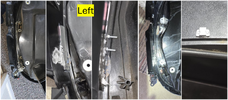
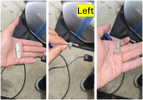
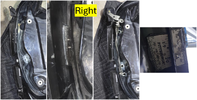
Update to Panniers, as suggested by Mike, Used the straps to hold it close. Looks and feels solid, but I am going to add 1 more as a fail safe ...

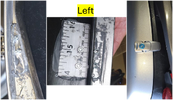
I was also able to drill out and remove the stuck rivets without more damage (one more skill added). In the second pic you see the crack form the second rivet hole. For now I am going to ride it for next 2 months and plan to fix the plastic in Dec .

20240929_131618 NT Pannier.jpg

20240929_131606 NT Pannier.jpg
 
Clever idea using one strap for both panniers, I used one per side. Until you can repair the plastic, you may want to consider drilling a small hole at the end of the crack to stop the crack from growing. From the looks of the crack, I think a layer of fiberglass woven roving on the interior of the pannier housing would prevent future cracks. I would still use a metal backing plate to relieve the clamping stress on the interior of the housing.

Mike
 
Clever idea using one strap for both panniers, I used one per side. Until you can repair the plastic, you may want to consider drilling a small hole at the end of the crack to stop the crack from growing. From the looks of the crack, I think a layer of fiberglass woven roving on the interior of the pannier housing would prevent future cracks. I would still use a metal backing plate to relieve the clamping stress on the interior of the housing.

Mike
HI Mike,

I am still using one strap for one side. The right side pannier is ok, its the left that has always caused the problems.

Good idea on the hole, I will do that right away.

I will research the fiberglass, but I was just thinking of JB Welding the metal plate to the inside.

Sunny
 
I suspect that the JB Weld would do just as good a job on attaching the backing plate but I was thinking of the fiberglass reinforcement as a larger base reinforcement in addition to the metal plate. The pannier base is pretty thin and UV rays will continue to deteriorate the plastic substrate.

Mike
 
Has anyone considered using two of the Owach or Southco latches per case? Owach makes a non-lockable version and Southco also (although only in the larger latch size). I’m thinking of using one of each per case. Wonder if any increase in rigidity would be beneficial. Are y’all satisfied with the single latch installation, or might you consider 2 per side were you to get a do-over? :think1:
My bike came with two locking Owach latches on the left saddlebag. I bought two non locking Owach latches. Plan is to replace one locking latch on the left bag with a non-locking one and end up with a locking latch and a non-locking latch on each saddlebag.
 
After several go-arounds with many other members regarding the external latches that I choose to install on my bike. I decided to replace them with a sleeker and motorcycle in appearance latches.

I settled on some latches made by OWACH Industrial Hardware available on Amazon, OWACH - CL-307-2L. The locks on these have 3 tumbler plates in the insert and the provided key fits loosely. Security is better than the ones that these replaced.

Here are several pictures of one of these that I installed last night.

View attachment 13346, View attachment 13347, View attachment 13348, View attachment 13349

These were installed using 1/8" Pop Revits with a 1/16" thick backing plate for rigidity.

I hope that these are more to everyone's liking. I got ripped on the last one that I used.

Let me know what you all think.
Do you have 1 on each side or 2 ?
 
I used only one. I found it to be meet the requirements of securing the lid in place.

Let me know if you need any additional information.
 
So finally fixed my Pannier and installed external latches.
History:
Jan 2023: Left Pannier latch problem, tried to fix with j-b weld. Worked for some time.
Sep 2024: the left latch gave up and popped open on Highway and did not want to stay closed. Lived life with keeping it closed with a strap.
Aug 2025: decided and fixed the latch and also reinforced all nut bosses in the panniers and the saddle bag plastic.

Some tools used (besides the regular needed tools)
1) Painter tape, man this is awesome, does not stick to J-B Weld, helps a lot. Also does not mar the plastic and comes off easy. Prevented a lot of scratches to the plastic.
2) J-B weld: this is gold. I used steel stick (& plastic stick) and reinforced all nut bosses: Inside the saddle bag (4 on each side) that hold the latching mechanism, the ones for the retain strap (2 on each side). Note: steel stick is very stron but sets in 5 min, Plastic stick sets in 20 min, but is much less strong.
3) Dremel tool with sanding drum, various grinding stones and carbide burr: helped shape and smother the J-B weld and the aluminum plates.
4) Aluminum ruler form Harbor Freight: used it to get 1 inch wide aluminum strips for back plates.
5) A steel lumber reinforcing plate with 1/8 inch holes, I used it as a guide to drill holes (avoid drill bit wander). Clamped it to the lid and did the hole. Worked very well.
6) Used a large HF parts box with Used lid for storing he screws etc. Then I wrote the location of the screws on the lid. Worked well.

Lots of thanks to @Brillot2000 (his info and his album was very very helpful) and @mikesim , and the others.

So here are the pics:

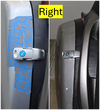
For left pannier, I misjudged the distance, so had to drill at an angle for the front , so I fashioned a l shaped back plate. For the Right pannier, the front screws were fine, but the rear are close to the inner lip. Unfortunately, due to the design and hole gap in the latch, this problem will be there. Right now , I am using nuts and bolts, but will transition to rivets soon.

All back plates are stuck using J-B weld, so they are not going anywhere.

Will paint the insides as back and the outside as silver too.

Happy to report that there were no extra screws left over :)

But I stored the right pannier strikers and screws so safely that I cant find them :)


1756168714961.png

1756169126638.png

1756169161059.png

1756169192014.png

1756169306318.png

1756169351864.png

Cheers
 
Last edited:
You might consider painting the black parts with a spray paint made for plastic to stop further deterioration from UV rays. I painted most of my plastic 2 years ago and it looks like new. I used Krylon Fusion All-in-One paint+primer, satin black. Made the plastic look like new, not shiney or dull.
 
Back
Top Bottom