The 2025 Transalp Has Landed

Joined
Nov 7, 2017
Messages
1,240
Age
52
Location
Sun Valley, CA
Bike
NT700V, NC700X, XL600R
First Impressions: 2025 Honda Transalp XL750

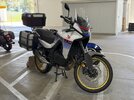
After the fiasco with my previous Energica Experia, I came into the Transalp with a fair bit of caution. Honda claims the 2025 model is a step forward with refinements across the board, and after nearly a week of riding, I can honestly say I don’t regret this purchase one bit.

Engine & Performance

The Transalp runs a 755cc, 240-degree parallel twin putting out 90 horsepower. Power delivery is sharp and deceptively strong — I’ve already lofted the front wheel unintentionally more than once, and every time it just brings a grin. The engine snarls with a note that reminds me of a KTM twin, pulling clean all the way to its 10,500 RPM redline. Honda’s rider aid suite is comprehensive, with multiple modes and two user slots. I’ve set one up as my “primary” and haven’t looked back. The quickshifter unlocks after the 600-mile service, and I’m eager to see how it changes the ride.

Comfort & Ergonomics

For long days in the saddle, I fitted Honda’s Comfort Seat (~$150), and it’s already proven worth it. Stock wind protection is solid, but I also picked up the taller touring screen and wind deflectors for cooler months. Heated grips went on as well — five levels, all integrated into the TFT display and controlled by the bar switch. Simple, seamless, Honda done right.

Accessories & Luggage

Aftermarket support is strong. Givi has full mounting options, and I was able to reuse my Trekker cases from the Experia — the insurance company let me keep them. T-Rex Racing offers serious protection, and their center stand and engine guards are on the way. Combined with Honda’s own accessories, the Transalp is easy to set up for touring or light ADV duty.

On the Road

The Transalp is exactly what I hoped for: versatile, balanced, and fun. It’s approachable without being dull, equally at home on backroads or highways. Build quality feels tight, solid, and confidence-inspiring. Every ride so far has left me smiling.

Verdict

The 2025 Honda Transalp XL750 is shaping up to be the perfect fit. It delivers the performance and excitement I wanted without sacrificing Honda’s reliability and ergonomics. With strong OEM and aftermarket support, it’s easy to kit out for any ride. My first impressions? This bike was worth the wait.


Bruce B.
 

Attachments

  • IMG_0371.jpg
    IMG_0371.jpg
    161.7 KB · Views: 32
First Impressions: 2025 Honda Transalp XL750

After the fiasco with my previous Energica Experia, I came into the Transalp with a fair bit of caution. Honda claims the 2025 model is a step forward with refinements across the board, and after nearly a week of riding, I can honestly say I don’t regret this purchase one bit.

Engine & Performance

The Transalp runs a 755cc, 240-degree parallel twin putting out 90 horsepower. Power delivery is sharp and deceptively strong — I’ve already lofted the front wheel unintentionally more than once, and every time it just brings a grin. The engine snarls with a note that reminds me of a KTM twin, pulling clean all the way to its 10,500 RPM redline. Honda’s rider aid suite is comprehensive, with multiple modes and two user slots. I’ve set one up as my “primary” and haven’t looked back. The quickshifter unlocks after the 600-mile service, and I’m eager to see how it changes the ride.

Comfort & Ergonomics

For long days in the saddle, I fitted Honda’s Comfort Seat (~$150), and it’s already proven worth it. Stock wind protection is solid, but I also picked up the taller touring screen and wind deflectors for cooler months. Heated grips went on as well — five levels, all integrated into the TFT display and controlled by the bar switch. Simple, seamless, Honda done right.

Accessories & Luggage

Aftermarket support is strong. Givi has full mounting options, and I was able to reuse my Trekker cases from the Experia — the insurance company let me keep them. T-Rex Racing offers serious protection, and their center stand and engine guards are on the way. Combined with Honda’s own accessories, the Transalp is easy to set up for touring or light ADV duty.

On the Road

The Transalp is exactly what I hoped for: versatile, balanced, and fun. It’s approachable without being dull, equally at home on backroads or highways. Build quality feels tight, solid, and confidence-inspiring. Every ride so far has left me smiling.

Verdict

The 2025 Honda Transalp XL750 is shaping up to be the perfect fit. It delivers the performance and excitement I wanted without sacrificing Honda’s reliability and ergonomics. With strong OEM and aftermarket support, it’s easy to kit out for any ride. My first impressions? This bike was worth the wait.


Bruce B.
Good choice, you can't go wrong on a Honda, enjoy. We expect a rider report later on.
 
So you're not a fan of running a new engine in gently... rather break it like a wild mustang... ye-hah... ;)
Babying it was never my chosen path for anything. Ride like you had stolen it. Be firm, but not recklessly dumb.
 
While breaking in / bedding in any new bike, I have always driven moderately during the first few hundred miles. Never lug the engine down, and never wide open throttle / red line. Vary the rpm as much as possible. No constant speed.
After the break in, change over to full synthetic oil and then “put it through its paces and see what she’ll do”.
Just my opinion.
 
While breaking in / bedding in any new bike, I have always driven moderately during the first few hundred miles. Never lug the engine down, and never wide open throttle / red line. Vary the rpm as much as possible. No constant speed.
After the break in, change over to full synthetic oil and then “put it through its paces and see what she’ll do”.
Just my opinion.
I well remember the days of breakin oil.
 
It is interesting to read all the engine recommended breakin procedures in our manuals and on the web. Until there is a difinitive SAE paper, I will continue to do the standard things with one caveot. Subaru won't let you use the turbo until the engine oil is warm. IMHO, you should always take it easy till the oil has warmed up. My new Subaru has a digital OEM oil temp gage, just like any recipe aircraft has. Nailing a cold engine isn't good and I have never seen one of my vehicles have oil burning or any major internal issue. Barb's leaky head gasket at 200,000 could be her fault but I don't think so.
 
While breaking in / bedding in any new bike, I have always driven moderately during the first few hundred miles. Never lug the engine down, and never wide open throttle / red line. Vary the rpm as much as possible. No constant speed.
After the break in, change over to full synthetic oil and then “put it through its paces and see what she’ll do”.
Just my opinion.
This is pretty much the procedure that I am familiar with and use on any new or rebuild engine.
 
This is pretty much the procedure that I am familiar with and use on any new or rebuild engine.
Despite tolerance changes, metalergy changes, oil technology, etc, it's still an engine. You won't hurt anything by following a 1000 mile regime. And it may help. But I am convinced you abuse any engine when it's temps are low, there is increased wear.
 
They need to make this exact bike with street suspension and cast 17" rims front/rear for tubeless radials. Or did I just describe the hornet? Dunno, I'd like to see this bike supermoto style.
 
While breaking in / bedding in any new bike, I have always driven moderately during the first few hundred miles. Never lug the engine down, and never wide open throttle / red line. Vary the rpm as much as possible. No constant speed.
After the break in, change over to full synthetic oil and then “put it through its paces and see what she’ll do”.
Just my opinion.
This what the Owners Manual has to say regarding Break-In.

Honda’s Official Break‑In Guidelines

According to the 2025 Transalp Owner’s Manual, during the first 300 miles (500 km) of riding, you should:
  • Avoid full‑throttle starts and rapid acceleration.
  • Avoid hard braking and rapid down‑shifts.
  • Ride conservatively to help ensure future reliability and performance.
 
Babying it was never my chosen path for anything. Ride like you had stolen it. Be firm, but not recklessly dumb.
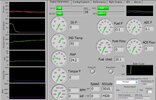
Hot rodders of the 1970s said basically the same thing. I come from a different world. When breaking in a new aircraft race engine...one that will be run with 120 in of Manifold pressure instead of 62 inches...the owner/pilots are very careful to put "slow time" on the engine. On the more expensive airplanes, there is telemetry beamed back to a mechanic on the ground for cyl. head temps, brake mean effective pressures, RPM, exhaust gas temp, etc. When the engine starts makeing metal, a chip detector tells the pilot that things are coming apart in the engine and its time to land. I can not count the engines I have seen blown up.

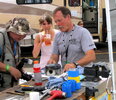
Navy Capt/Top Gun graduate/ test pilot / Vietnam vet/ Space shuttle pilot/ space shuttle commander Robert Hoot Gibson shows off a piston with some issues when his engine blew. He used to quip that after landing the Space Shuttle where you only get one chance, landing a crippled aircraft is a piece of cake. This was the end of his racing for 2011. This was a radial engine powered Sea Fury. He won in a highly modified Mustang in 2015, averaging 488 mph at 5000 ft in an aircraft that would normally run 350 mph at 5000 ft.

a hoot 2011.JPG

2007 remote telemetry board.
232_telemetry.jpg
When your engine comes apart (mustang in pic) and a loose con rod whipsaws the crank case in half and the only thing holding the engine together are the heads.
an engine block.jpg
 
Back
Top Bottom